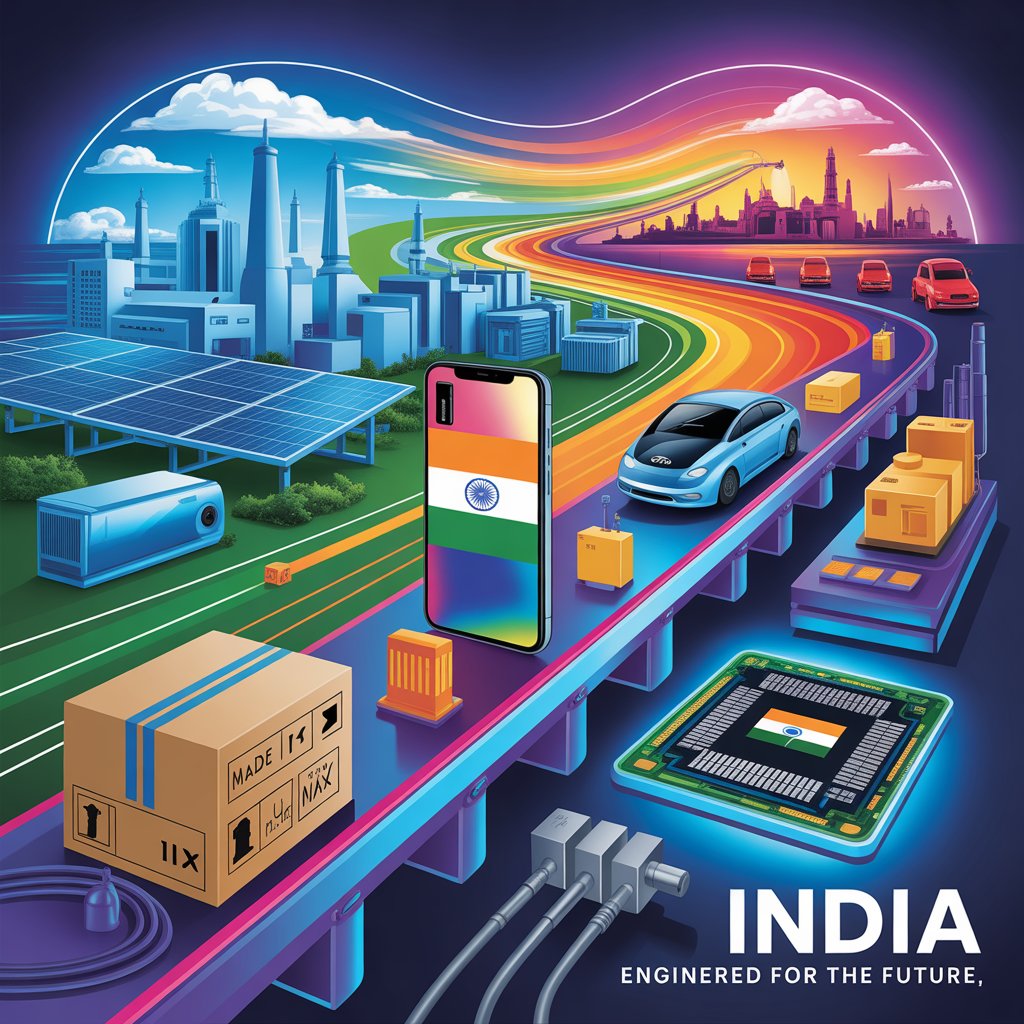
You are holding a brand new iPhone 16 Pro Max. Now, imagine this iPhone is fully manufactured in Tamil Nadu at Sriperumbudur and not imported from China?
And visualize you are driving a Tata Nexon EV assembled completely in Pune. Or using a Samsung Galaxy smartphone manufactured in Noida. Once upon a time, all these products were imported from China and South Korea, they are now proudly carrying the “Made in India” tag.
Relax! You are not seeing any dream, nor am I sounding over-excited. This is a truth. India is on a transformational journey from an import-dependent consumer economy to a global manufacturing powerhouse.
But here is a key question: Are we on the path towards real transformation or impressive headlines that lack reality?
Vision of Make in India
On September 25, 2014, Honorable Prime Minister Narendra Modi launched the ‘Make in India’ scheme. It was introduced with four objectives to mark the rebirth of India’s manufacturing potential. Let’s understand each point with an example:
● To increase and promote manufacturing capabilities for domestic goods. For instance, the launch of INS Vikrant, India’s first domestically built aircraft carrier, marked a significant milestone in defence manufacturing.
● To reduce the country’s dependency on heavy imports. For example, the Semicon India Program has a Rs.76,000 crore budget. It aims to establish sustainable semiconductor manufacturing to reduce import dependency.
● To reduce the unemployment rate and increase employment opportunities. The Startup India Initiative can be the best example to illustrate this point. It led to the establishment of over 148,931 startups, generating 15.5 lakh direct jobs.
● To attract substantial global investment to transform India into a manufacturing hub. India has received significant foreign investments, like Micron’s Rs. 22,000 crore. This is for investment in semiconductor manufacturing under the Semicon India program.
Additionally, the focus was also on changing perceptions that India is rich in resources. A genuine attempt to convince the world that India can be a perfect destination where world-class products can be imagined, designed, and built.
Progress Highlights
The Smartphone Reforms
A massive transformation was observed in the electronics market when Apple officially began the production of the iPhone 16 Pro Max. This is the confidence of the company in India to produce its flagship Pro models outside China. Because India is cost-effective in every aspect. Foxconn’s facility in Sriperumbudur, Tamil Nadu, has become Apple’s strategic manufacturing base. India produces these premium devices for both domestic consumption and global export.
While Samsung has also considered India its favorite spot. It has built the world’s largest mobile phone manufacturing facility in Noida, significantly boosting its production capacity. Now, more phones are manufactured in this single Indian facility than Samsung produces in South Korea and Vietnam combined.
Several other major brands, such as Xiaomi, Oppo, Vivo, and OnePlus, have developed large-scale manufacturing operations in India. These companies have established their plants in states such as Tamil Nadu, Uttar Pradesh, and Andhra Pradesh.
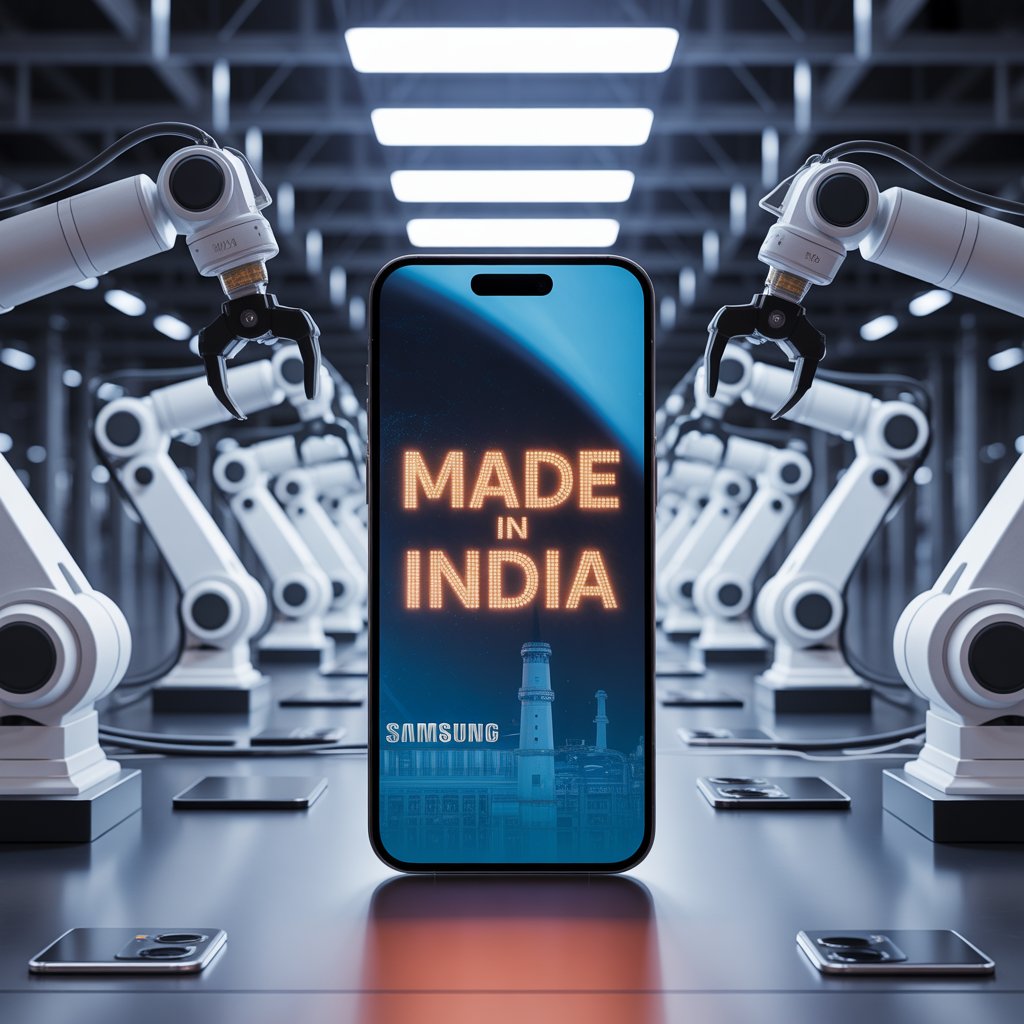
Let’s look into some other areas where India is heading towards manufacturing its own products.
Silicon Dreams Becoming Reality
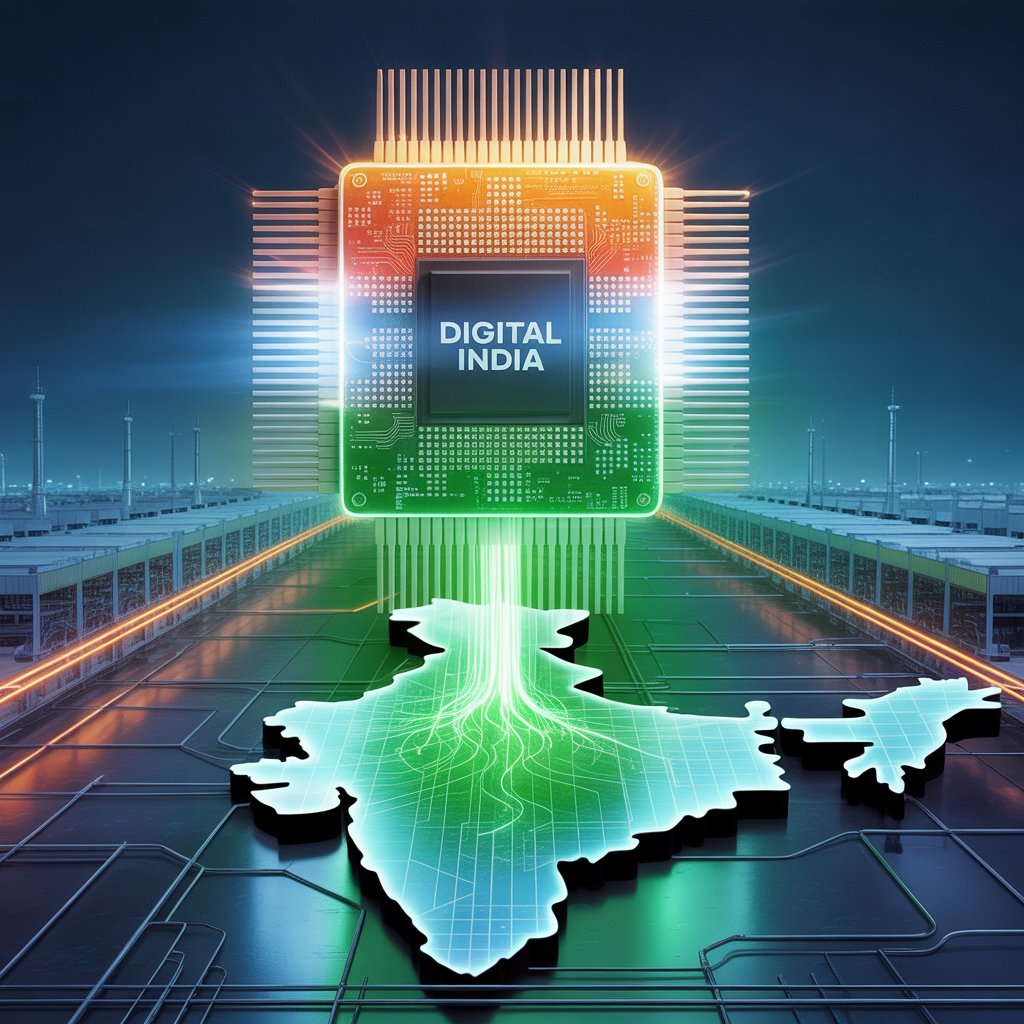
Do you know that India is approaching a historic milestone? The production of its first indigenous semiconductor chip is scheduled from September to October 2025. Tata Group introduced a semiconductor fabrication facility in Dholera, Gujarat. It represents more than industrial capacity.
This shows the grand entry of the Indian market into the world’s most strategically important and technologically advanced sectors. The Government of India has also given support by approving Rs.1.52 lakh crore in semiconductor total investments. This huge investment acknowledged the production of semiconductors as a strategic national resource. The goal is to achieve technological independence and supply chain security in a dynamic digital world.
Incentives Driving Manufacturing Boom
Regarding the Production Linked Incentive (PLI) program, it has become the key player behind India’s manufacturing comeback. This program had received a budget of Rs.1.97 Lakh Crore covering 14 critical sectors to boost the manufacturing capabilities and increase exports of the country. The impact of the program showed clearly when 755 applications had been approved, bringing in a major Rs.1.23 lakh crore as of March 2024. This has led to the generation of employment opportunities for approximately 8 lakh individuals.
Moreover, the purpose of this scheme was to attract investments in key sectors to encourage the adoption of cutting-edge technology. Secondly, to build economies of scale in manufacturing and turn Indian enterprises into globally competitive players.
The SPECS (Scheme for Promotion of Manufacturing of Electronic Components and Semiconductors) program works with PLI by offering 25% capital expenditure incentives. The objective is to make India an attractive alternative to traditional manufacturing hubs for global electronics companies seeking supply chain diversification.
Surprisingly, there are several controversies surrounding this scheme.
- The United States raised specific concerns about specialty steel under PLI at the WTO. The US also stated that subsidizing production amid global overcapacity in steel violates fair trade principles and may disrupt the global market.
- TESLA Case Study:
● Tesla’s prolonged negotiations with the Government of India from 2020 to 2022. It had revealed some critical gaps that the PLI scheme has not been able to address fully.
● Besides that, Elon Musk’s company had initially asked for 40% relaxation in import duties before committing to local manufacturing. This leverage was already given by countries like China and Vietnam for Tesla’s entry.
● But, Tesla faced a 100% import duty on Completely Built Units (CBUs) due to delays in policy clarifications and manufacturing setup. This strict policy cost India a flagship investment.
● Now, Tesla’s Shanghai Gigafactory produces over 750,000 units per year for both domestic consumption and export.
From Import Dependency to Domestic Strength
Are you aware that India has now become a significant player in the global toy manufacturing market? You are buying a toy for your toddler and see a tag ‘Made in India’. This reflects the actual transformation. Yes, India now produces 400 million toys annually.
Several sectors include:
Automotive Manufacturing:
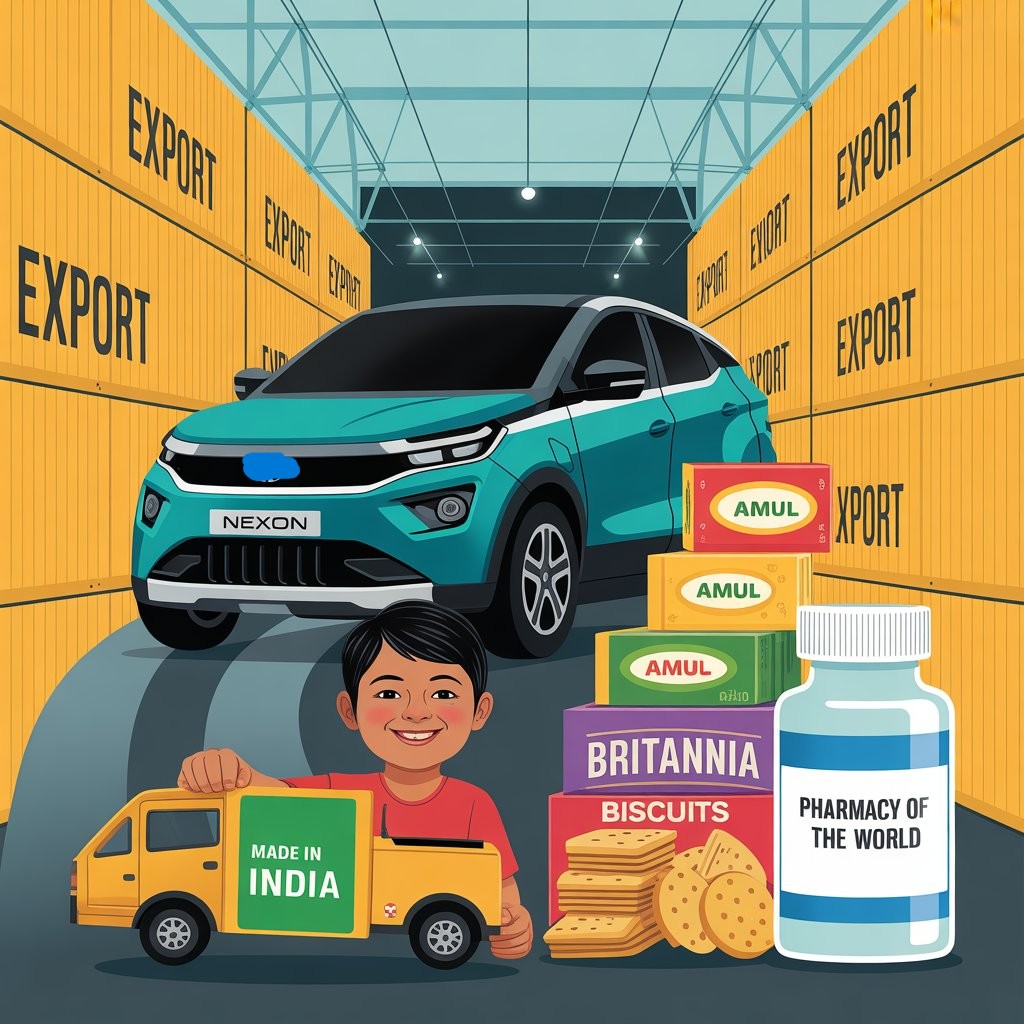
● Tata Motors, now valued at USD 42 billion, represents India’s automotive manufacturing capabilities. Tata has manufacturing plants in several cities, which represent India’s ability to produce world-class vehicles.
● Moreover, Hyundai’s manufacturing plant in Chennai can produce up to 824,000 units to export. Models like Creta, Grandi10, and several others are being manufactured in Tamil Nadu to compete globally with vehicles produced in traditional automotive manufacturing centers.
Food & Beverages:
India’s food processing sector shows manufacturing capabilities across diverse categories.
● With dairy products competing with the international brands, Amul is valued at $4.1 billion. It has earned recognition as India’s top food brand for 2025, with manufacturing facilities across 17 states of India.
● Leading food company, Britannia, has manufacturing centers across 12 states in India. This illustrates how Indian food manufacturing has evolved. Britannia exports to 80 countries across the globe, with foreign exchange earnings approx. Rs.374.13 Crores.
Pharmaceutical:
India manufactures 60% of the world’s vaccines and supplies generic medicines to over 200 countries. India is the “pharmacy of the world” with companies such as Dr Reddy’s and Cipla running world-class manufacturing plants that meet high standards of international regulation.
FDI & Manufacturing Growth
An increase in the confidence of foreign countries in the manufacturing potential of India has translated into good foreign direct investment. India has become a hub for FDI in manufacturing sectors. It has grown by 18% in FY 2024–25, reaching USD 19.04 billion compared to USD 16.12 billion in FY 2023–24. Therefore, it attracts multinational corporations seeking to establish production bases for both domestic consumption and global export.
But still, there is high competition with China and Vietnam:
● During FY 2022, China registered 5% yearly growth to USD189 billion in FDI.
● Vietnam has developed a strong niche in electronics. South Korea’s Samsung has invested USD 1.8 billion to produce OLED displays for automobiles and technology equipment.
The government set an ambitious target of increasing manufacturing’s GDP share from 16% in 2014 to 25% by 2025. But, as of 2024, the share of manufacturing is 12.53% a decline from 13.02% in 2023. Several critical challenges are responsible for achieving this target, such as:
● Weak demand and systemic issues.
● Reduced capital formation and investment.
● Infrastructure, logistics, and high input costs.
● Complex regulatory and labor environment.
Although the targeted benchmark is yet to be achieved, the ‘Make in India’ initiative continues to position itself on a path of becoming a manufacturing powerhouse.
Reforms in Infrastructure & Business Ecosystem
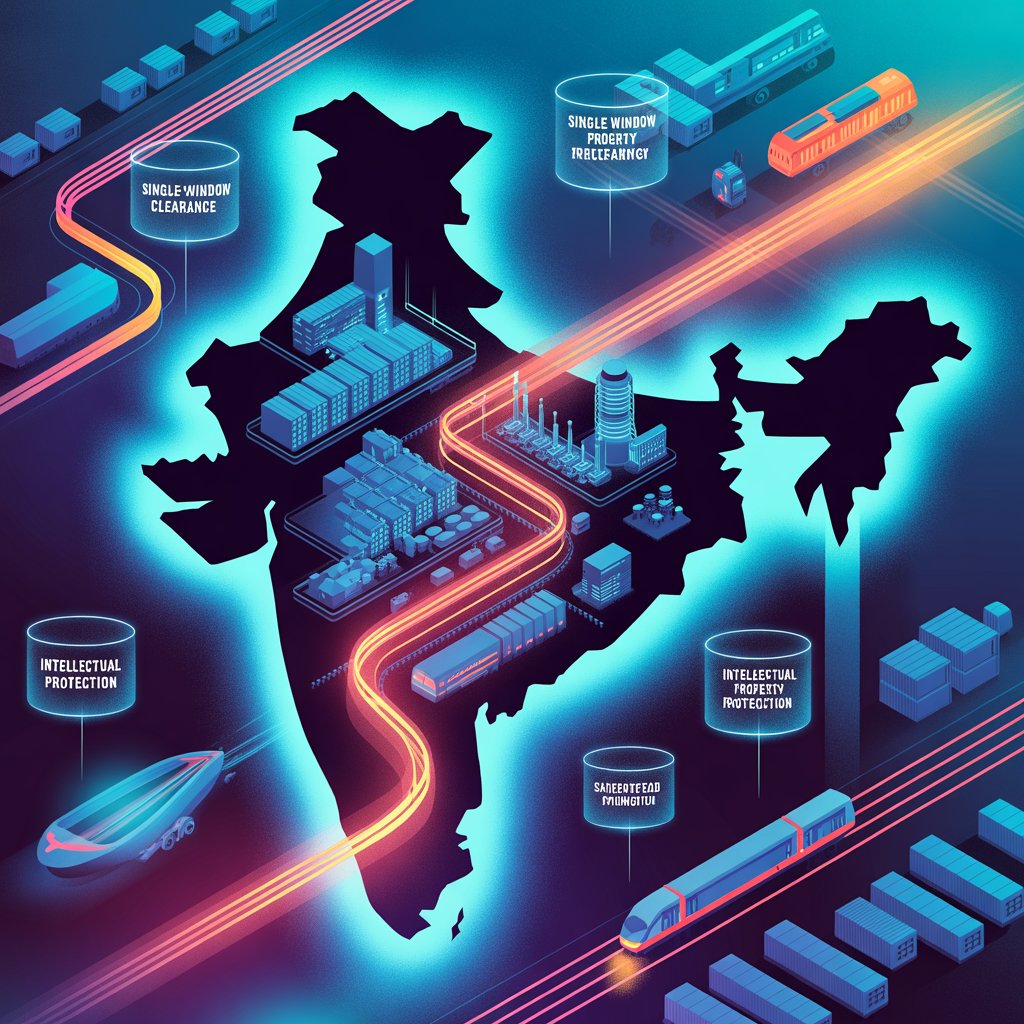
Another initiative called the PM Gati Shakti initiative has provided a smooth and seamless convenience by developing an interconnected multi-modal connectivity. The aim of this scheme is to assist the manufacturing centers to link to ports, markets, and supply network systems efficiently. Under this scheme, the manufacturing superhighways have been created in the form of industrial corridors between Delhi-Mumbai, Chennai-Bengaluru, and Amritsar-Kolkata, which have helped different industries.
Regulatory reforms are also transformative:
● Simple labor laws will help businesses expand more efficiently and fast.
● Increased protection of intellectual property promotes innovation and the transfer of technology.
● Single-window clearance has reduced bureaucracy, hence, it has become easy to establish and run manufacturing plants.
Challenges Ahead
There are still fundamental issues that require attention. These issues are limiting India’s manufacturing potential, despite the remarkable developments like PLI success and FDI inflows. Rapid manufacturing expansion creates demand for skilled workers. The education and training systems struggle to meet this requirement. So, there is an increase in skill gaps.
Although research and development capabilities are enhancing, they are still far behind the global manufacturing leaders. Hence, this restricts India from moving up the value chain in manufacturing sectors. Innovation ecosystems require deeper development to support advanced manufacturing technologies.
Legal hurdles such as obtaining power connections, approvals for land & water, and labor law compliance. Though they are reduced at the central level, they continue to create challenges at the state and local levels.
Furthermore, regulatory coordination between different government levels sometimes creates implementation delays. Reasons can be multiple, such as oversight, contradictory rules, communication gaps, and split accountability.
There is a need to maintain focus and investments to build domestic supply chains for these critical inputs.
The Road to True Self-Reliance
To become truly self-reliant, investment in technology innovation, research and development must increase. India should maximize the involvement of Micro, Small, and Medium Enterprises (MSMEs) in global supply chains. This can be done through schemes like RAMP, MDA, EPCG, etc. The growth in manufacturing needs to have a positive impact on the distribution of economic benefits.
Green manufacturing and sustainability have become the main stage in future growth. The trend of manufacturing growth in India should align with environmental obligations. This includes reducing greenhouse gas, air and water pollution. Further, we should also increase the use of recyclable and renewable materials. This is due to the international market being increasingly shifting towards eco-friendly manufacturing.
Additionally, Indian competitiveness in the next stage of manufacturing development will be determined by adopting Industry 4.0 principles. Along with that, artificial intelligence and digital devices should be given equal importance.
Finally, Fiscal incentives based on performance metrics will maintain momentum. At the same time, it is crucial to ensure that any support can be translated into economic outcome measures. It has to be more of quality manufacturing and technology enhancement rather than the number of manufacturing units.
A Manufacturing Revolution in Motion
The shift from importing basic electronics to producing smartphones represents India’s most significant economic transition in modern history. These are not just industrial achievements when Apple produces iPhone 16 Pro Max units in Sriperumbudur, and when Tata prepares to produce India’s first indigenous semiconductor chips; they define fundamental changes in global manufacturing dynamics.
These evidences show that “Make in India” has moved beyond ‘reducing the imports’ to a complete rethinking of India in the world economy. The initiative confirmed that strategic planning, sustained policy support, and good implementation can change the manufacturing potential of an economy in ten years.
As India is on the threshold of becoming a global manufacturing leader, one key question arises: Will it shape the future by setting world benchmarks in areas such as innovation and sustainability? Or continue to follow in the footsteps of other manufacturing economies?
References:
- https://www.businesstoday.in/technology/news/story/first-batch-of-made-in-india-iphone-16-pro-max-has-arrived-see-video-454862-2024-11-23.
- https://www.business-standard.com/technology/tech-news/apple-kicks-off-iphone-16-pros-manufacturing-in-india-plans-4-more-stores-124100400360_1.html.
- https://www.business-standard.com/companies/news/foxconn-begins-iphone-16-pro-pro-max-production-in-india-costs-fall-10-124082100188_1.html.
- https://www.pib.gov.in/newsite/printrelease.aspx?relid=109953.
- https://www.pib.gov.in/PressNoteDetails.aspx?NoteId=153203&ModuleId=3®=3&lang=1.
- https://www.pib.gov.in/PressReleasePage.aspx?PRID=2131716.
- https://www.bajajfinserv.in/make-in-india#:~:text=Understanding%20the%20Make%20in%20India,the%20electronics%20sector%20at%2027.3%25.
- https://www.theglobaleconomy.com/India/Share_of_manufacturing/?utm.
- https://www.pib.gov.in/PressReleasePage.aspx?PRID=2039119.
- https://specs.ifciltd.com.
- https://indianexpress.com/article/technology/tech-news-technology/xiaomi-aims-to-boost-local-manufacturing-in-india-announces-three-new-smartphone-plants/.
- https://www.oppo.com/in/newsroom/press/oppo-announces-vihaan-initiative-to-boost-export/.
- https://economictimes.indiatimes.com/industry/cons-products/electronics/oneplus-begins-production-of-made-in-india-iot-devices-with-optiemus-electronics/articleshow/121925117.cms.
- https://knnindia.co.in/news/newsdetails/sectors/electronics/indias-first-indigenous-semiconductor-chip-set-for-launch-by-2025-as-govt-prioritizes-tech-development#google_vignette.
- https://www.tata.com/newsroom/business/first-indian-fab-semiconductor-dholera.
- https://www.pib.gov.in/PressNoteDetails.aspx?ModuleId=3&NoteId=152130.
- https://manufacturingdigital.com/articles/samsung-makes-it-in-india.
- chrome-extension://efaidnbmnnnibpcajpcglclefindmkaj/https://www.hyundai.com/content/dam/hyundai/in/en/data/investor-relations/annual-report/annual-report2024-25.pdf#:~:text=True%20to%20the%20spirit%20of%20’Make%20in,of%20Indian%20manufacturing%20on%20the%20global%20stage.
- https://www.hyundai.com/worldwide/en/newsroom/detail/hyundai-motor-group-executive-chair-euisun-chung-visits-india-to-underline-mid-to-long-term-mobility-strategic-commitments-0000000754#:~:text=With%20the%20addition%20of%20the,combined%20with%20the%20Pune%20plant.
- https://economictimes.indiatimes.com/industry/cons-products/food/amul-remains-indias-top-food-brand-with-4-1-billion-valuation-mother-dairy-second-report/articleshow/122141778.cms?from=mdr.
- https://www.tatamotors.com/press-releases/tata-motors-signs-definitive-agreement-to-acquire-27-stake-in-freight-tiger/#:~:text=Part%20of%20the%20USD%20128,the%20market%20and%20the%20customers.
- https://www.pib.gov.in/PressReleasePage.aspx?PRID=1931918.
- https://www.policycircle.org/economy/india-manufacturing-rebounds-2025/.
- https://www.drishtiias.com/daily-updates/daily-news-editorials/reforming-india-s-manufacturing-sector.
- https://www.india-briefing.com/news/india-as-an-emerging-global-manufacturing-hub-32736.html/.
- https://media.britannia.co.in/BRITANNIA_Annual_Report_2023_24_18_07_2024_Final_01_High_1_8d1bc38e58.pdf.
 Sundhara
Leave a comment